When Are the 2026 and 2027 E-mini Roll Dates?
Updated October 2026
To roll, you close the expiring contract and open the next quarterly contract. CME Group lists the customary roll date as the Monday before the third Friday of March, June, September and December, and the last trading day as the third Friday. These dates apply to E-mini S&P 500 (ES), E-mini Nasdaq 100 (NQ), E-mini Russell 2000 (RTY) and E-mini Dow (YM) futures, and to the micro contracts MES, MNQ, M2K and MYM. All times are Central Time (CT).
| Contract month | Code and symbol | Roll date (Monday) | Last trading day (third Friday) |
|---|---|---|---|
| December 2026 | ZESZ26 | Mon, Dec 14, 2026 | Fri, Dec 18, 2026 |
| March 2027 | HESH27 | Mon, Mar 15, 2027 | Fri, Mar 19, 2027 |
| June 2027 | MESM27 | Mon, Jun 14, 2027 | Fri, Jun 18, 2027 * |
| September 2027 | UESU27 | Mon, Sep 13, 2027 | Fri, Sep 17, 2027 |
| December 2027 | ZESZ27 | Mon, Dec 13, 2027 | Fri, Dec 17, 2027 |
Trading in the expiring contract ends at 8:30 AM CT on the last trading day, and the contract settles in cash to the Special Opening Quotation of the index that morning.
* June 18, 2027 is the date shown on the CME Group roll calendar. The NYSE is closed that day for the Juneteenth holiday observed, so check the CME Group calendar for the final June 2027 schedule before you roll.
To build the symbol for any of these contracts, add the month code and the last two digits of the year to the product code. December 2026 is ESZ26, NQZ26, RTYZ26 and YMZ26, and MESZ26, MNQZ26, M2KZ26 and MYMZ26 for the micros. Platform symbols can differ, so see the CQG exchange symbols list. For contract basics, read What are ES futures?
On the roll date, CME Globex treats the next quarterly contract as the lead month. Trading volume can move to the next contract before or after that day, so many traders also watch volume and open interest in both months.
CME Group can change these dates. Check the CME Group equity index roll dates calendar and the CME Group E-mini S&P 500 contract specs before you roll. Dates checked October 26, 2026. Futures trading involves substantial risk of loss and is not suitable for all investors.
What Is an Index Futures Rollover?
A futures rollover is the process of moving a position from an expiring futures contract into the next active contract month.
A rollover involves two transactions:
- Closing your current contract.
- Opening the next contract month.
This allows traders to maintain market exposure without holding an expiring contract.
Example
Current position:
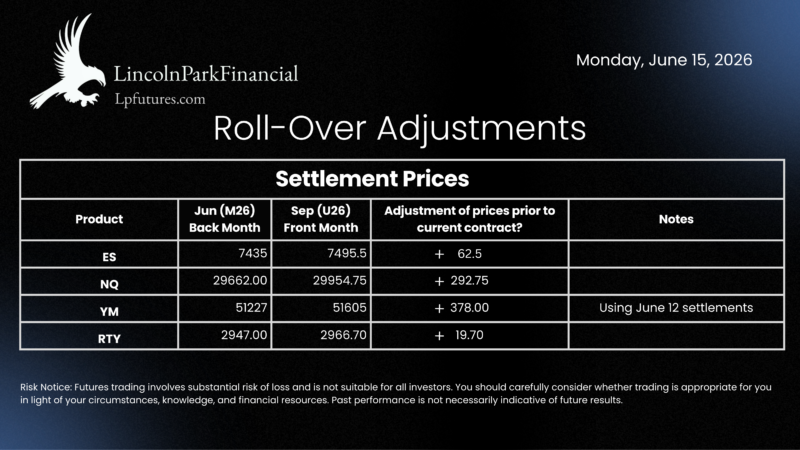
Long 1 E-mini S&P 500 June contract (ESM26)
Rollover:
- Sell 1 ESM26
- Buy 1 ESU26
Your market exposure remains largely the same while transitioning into the September contract.
Which Index Futures Need To Be Rolled Over?
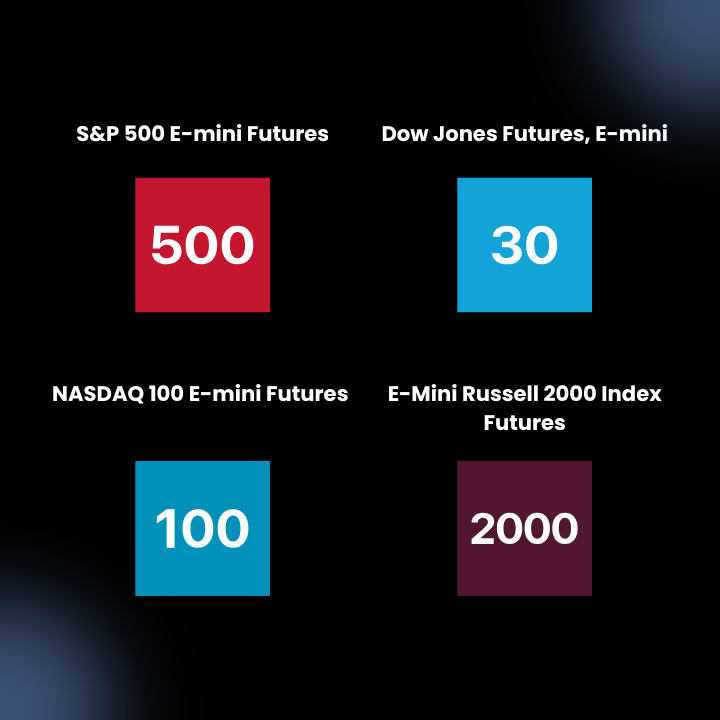
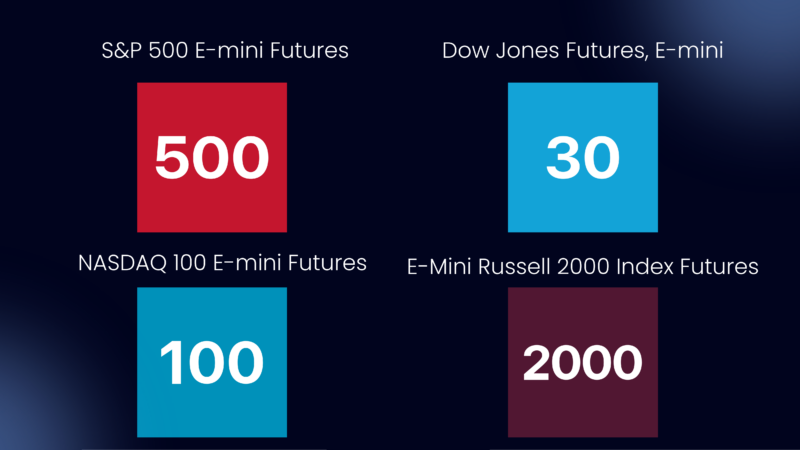
The most actively traded U.S. index futures contracts include:
Index Futures Expiration Months
Index futures expire four times per year.
| Month | Code |
|---|---|
| March | H |
| June | M |
| September | U |
| December | Z |
Examples:
| Contract | Symbol |
|---|---|
| March 2026 ES | ESH26 |
| June 2026 ES | ESM26 |
| September 2026 ES | ESU26 |
| December 2026 ES | ESZ26 |
The final two numbers represent the year.
| Product | Symbol |
|---|---|
| E-mini S&P 500 | ES |
| Micro E-mini S&P 500 | MES |
| E-mini Nasdaq 100 | NQ |
| Micro E-mini Nasdaq 100 | MNQ |
| E-mini Russell 2000 | RTY |
| E-mini Dow Jones | YM |
All of these contracts follow a quarterly expiration cycle.
The same roll steps apply to Micro Dow futures (MYM) and Micro Russell 2000 futures (M2K).
When Should You Roll ES, NQ, MES and MNQ Futures?
Most professional traders do not wait until expiration day.
Instead, traders monitor liquidity.
CME Group lists the customary roll date as the Monday before the third Friday of the contract month, but the actual transition occurs when market participants migrate into the next contract month.
Many traders roll when:
- Trading volume shifts into the next contract.
- Open interest begins increasing.
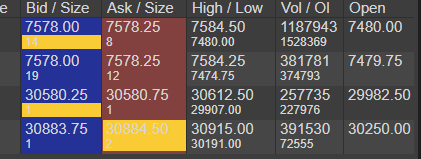
- Bid and ask spreads tighten.
- Institutional traders begin trading the new contract.
Liquidity is often the most important indicator.
How To Know Which Contract Is Active
Always trade the contract with the highest liquidity.
Many trading platforms automatically display both contract months during rollover periods.
Trading Volume
Higher volume generally indicates where traders are active.
Open Interest
Open interest measures outstanding positions.
Bid/Ask Spread
Tighter spreads often indicate more liquidity.
How To Roll Over Futures Contracts
The process is straightforward.
Step 1: Close Your Existing Position
Example:
Sell your June ES contract.
Step 2: Open The New Contract
Buy the September ES contract.
Your market exposure remains similar while trading the next active month.
Example: Rolling E-mini Nasdaq-100 Futures (NQ)
Suppose you are long one June Nasdaq contract.
Current position:
Long 1 NQM26
Rollover process:
- Sell 1 NQM26
- Buy 1 NQU26
You now have exposure to the September contract instead of the June contract.
Why Do Futures Contract Prices Differ?
During rollover periods, traders often notice price differences.
This is called the calendar spread.
Price differences may be influenced by:
- Interest rates
- Dividend expectations
- Financing costs
- Market expectations
These differences are normal.
They do not necessarily indicate a directional move in the market.
Why Liquidity Matters During Futures Rollover
Liquidity may deteriorate quickly in expiring contracts.
Staying in an inactive contract can lead to:
- Wider bid and ask spreads
- Less efficient execution
- Reduced market participation
- Increased slippage
Most active traders transition once liquidity shifts.
Quarterly Futures Rollover Calendar
| Expiration Month | CME Group roll date |
|---|---|
| March | Monday before the third Friday of March |
| June | Monday before the third Friday of June |
| September | Monday before the third Friday of September |
| December | Monday before the third Friday of December |
See the exact 2026 and 2027 dates in the roll date table at the start of this page.
Always verify exchange calendars and monitor liquidity.
Common Futures Rollover Mistakes
One of the most common mistakes traders make during an index futures rollover is waiting until expiration day to switch contracts. Liquidity often begins to decline before the contract officially expires, which can lead to wider bid and ask spreads and less efficient order execution. Another mistake is trading the wrong contract month, so it is important to always verify that you are trading the active contract before placing an order. Traders should also avoid ignoring trading volume, as the expiring contract may no longer have the highest liquidity once market participants begin transitioning to the next month. Finally, traders using automated strategies, algorithms, or custom indicators should remember to update their symbols and settings during rollover periods to ensure their systems continue trading the correct futures contract.
Ready to trade index futures? Open an index futures account or review futures commission pricing.
Frequently Asked Questions (FAQs)
A futures contract rollover is the process of closing an expiring futures contract and opening the next contract month to maintain market exposure.
Many traders roll ES futures once liquidity shifts to the next contract month. CME Group lists the customary roll date as the Monday before the third Friday of March, June, September and December.
NQ futures are commonly rolled when trading volume migrates to the next contract month.
Yes. MES and MNQ follow the same quarterly expiration cycle as ES and NQ.
- H = March
- M = June
- U = September
- Z = December
If you do not roll your contract, it will eventually expire and settle according to exchange rules.