What Are CME Group Single Stock Futures?
This video explains how CME Group Single Stock Futures work, including contract size, tick value, financial settlement, trading nearly 24 hours a day, futures margin, and brokerage account access.
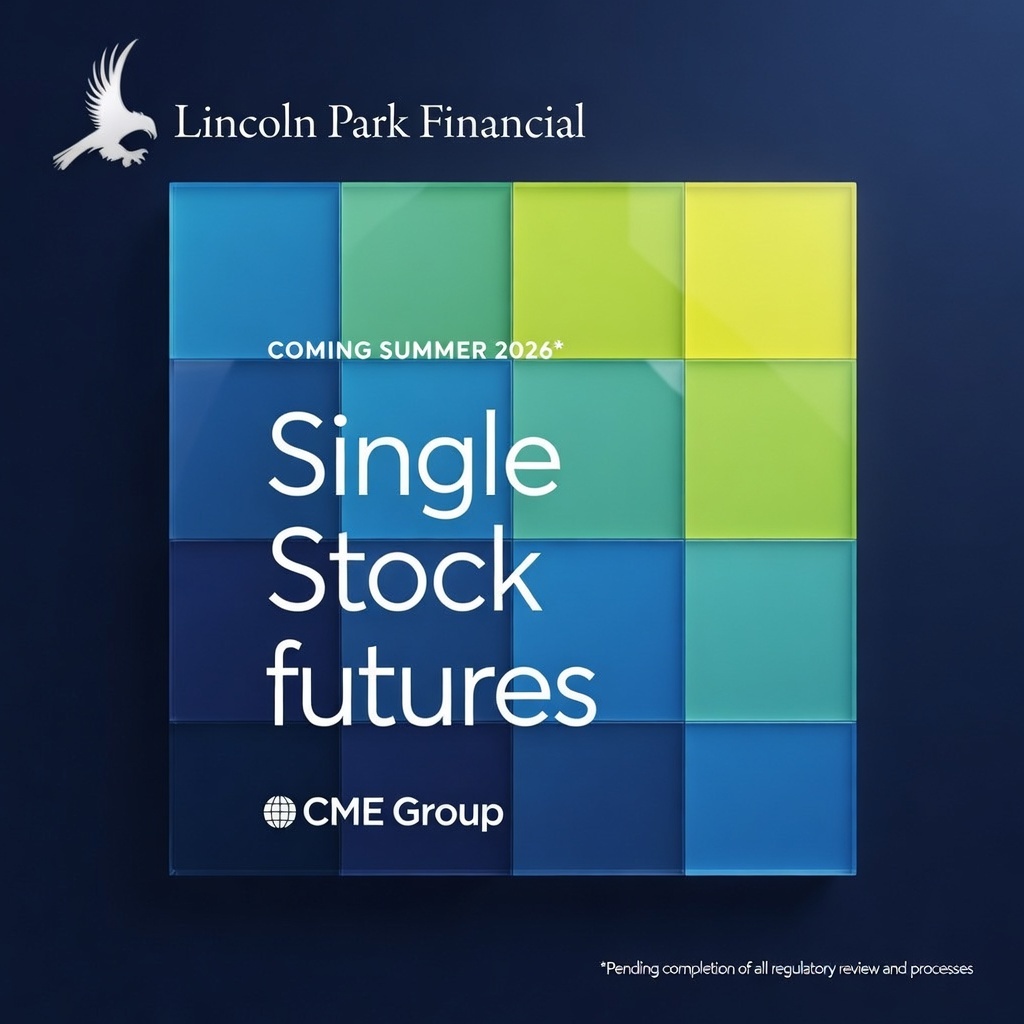
In 2026, CME Group listed Single Stock Futures on more than 50 large U.S. stocks, including names such as Alphabet, Meta, NVIDIA, and Tesla. These contracts are financially settled futures based on the price of an individual stock. This article explains how these contracts work, how they compare with trading shares directly, and the risks involved.
If you trade stocks and are considering futures beyond broad indices or commodities, it may help to understand how this market works. The sections below cover contract terms, margin, settlement, and key risks.
Before trading, please review the Risk Disclosure Statement for Security Futures Contracts.
To request a copy of the disclosure statement or supporting documentation for any claims, comparisons, or statistics in this article, contact customerservice@lpfutures.com or call (312) 500-4730.
What Are Single Stock Futures?
A Single Stock Future is a standardized futures contract tied to the price of an individual stock. Typically, one contract represents 100 shares. Unlike options, futures are binding commitments to a transaction. Buy, and you are taking a position; sell, and you are taking the other side.
Most CME Group Single Stock Futures are financially settled, meaning you never take delivery of the underlying shares. Instead, gains and losses are credited or debited daily, based on the difference between the entry price and the contract settlement. Positions are financially settled, so shares are not delivered.
In short, Single Stock Futures let traders gain exposure to individual equities through a margined futures contract.
Why CME Group Reintroduced Single Stock Futures in 2026
Single Stock Futures are not brand new. OneChicago, a joint venture that included CME Group predecessors, launched U.S. single stock futures trading in November 2002 and ceased trading in September 2020. CME Group listed its own Single Stock Futures on July 27, 2026.
The 2026 listing responds to demand for ways to hedge stock positions, manage risk, and use capital across portfolios. CME Group Single Stock Futures give retail and institutional traders standardized, financially settled contracts on major U.S. stocks.
Tim McCourt, CME Group’s Global Head of Equities, FX, and Alternative Products, explained:
“These contracts will provide a simpler, more cost-effective way to take a view on a stock, while allowing market participants to gain exposure to, or hedge potential price movements, without buying shares outright.”
For traders, this means a tool to act on market views without posting the full notional value of the shares or handling share delivery.
Start Trading Single Stock Futures with Lincoln Park Financial.
Complete the form below and a member of our team will contact you to discuss your trading setup and available account options.
Understanding the Risks
Leverage is powerful, but it works both ways. A sharp move against your position can quickly erode margin. Futures accounts are marked to market daily, and if your equity falls below maintenance margin, you will face a margin call or forced liquidation.
Liquidity can also vary by stock. Single stock futures may not always match the tight spreads of their underlying equities. Traders with short holding periods should be mindful of this when planning entries and exits.
Risk management is essential. These products reward discipline, preparation, and a clear understanding of your portfolio.
Single Stock Futures vs Trading Stocks
Here’s a snapshot comparison for clarity:
| Factor | Single Stock Futures | Stocks |
|---|---|---|
| Margin Required | At least 15% of notional (exchange and firm levels may be higher) | 50% (Reg T) |
| Pattern Day Trading Rule | Not applicable | Applies |
| Short Selling | Sell the contract | Requires borrow |
| Trading Hours | Nearly 24/5 | Limited pre/after hours |
| Dividends | Reflected in pricing | Paid directly |
| Settlement | Cash | Shares exchanged |
Figures are illustrative. Exchange and firm margin requirements may exceed regulatory minimums and may change. Supporting documentation is available upon request.
A subtle but important detail: dividends are built into futures pricing rather than paid directly. Traders need to account for this if holding positions through dividend periods.
Who Should Consider CME Group Single Stock Futures?
Active traders familiar with futures seeking exposure to individual stocks.
Portfolio managers looking to hedge without liquidating shares.
Traders restricted by PDT rules who want more freedom to trade.
For beginners, these contracts may not be the first step. Understanding daily marking to market, margin mechanics, and contract expiration is essential. If you are comfortable with index or commodity futures, adding Single Stock Futures to your toolkit is a logical next step.
Compare NVIDIA, Tesla, Apple and other contracts on our CME Group single stock futures page.
How Do Single Stock Futures Work?
A single stock future is a contract that tracks the price of one company’s shares. A standard CME Group contract covers 100 shares and a Micro contract covers 10 shares. The buyer gains if the futures price rises and the seller gains if it falls. Instead of paying the full contract value, each side posts margin. Positions are marked to market every day, and open contracts are financially settled at expiration, so no shares change hands.
What Is the Margin on a Single Stock Future?
Margin is a good faith deposit that is a percentage of the contract value. The contract value of a standard contract is 100 times the futures price, and 10 times the futures price for a Micro contract. The exchange and the clearing firm set the margin rate within the regulatory minimums for security futures, and rates can change when volatility changes. See our margins page for current requirements.
Are Single Stock Futures Risky?
Yes. Single stock futures are leveraged, so a small move in the stock can create a large gain or loss compared with the margin posted, and losses can exceed the amount deposited. One company can move sharply on earnings or news, and trading activity can vary from contract to contract. Security futures are not suitable for all investors. Please review the Risk Disclosure Statement for Security Futures Contracts before trading.
Frequently Asked Questions About CME Group Single Stock Futures
CME Group Single Stock Futures are standardized futures contracts based on the price movement of individual company stocks. Each standard contract represents 100 shares of the underlying stock and is financially settled, meaning traders do not take delivery of the actual shares. CME Group listed these contracts on 55 large U.S. stocks, with Micro contracts on 22 of those names, beginning July 27, 2026.
Single Stock Futures are futures contracts based on individual stocks, while regular stock trading involves buying or selling shares directly. Unlike stocks, CME Group Single Stock Futures are designed to trade nearly 24 hours a day during the trading week and may allow traders to control exposure with futures margin. Compared with stock options, Single Stock Futures offer more direct directional exposure without complex options payouts, Greeks, or options strategies.
CME Group Single Stock Futures let traders take a long or short view on the price movement of individual stocks through a futures contract. The CME Group listing includes more than 50 large U.S. stocks. CME Group has named companies such as Alphabet, Meta, NVIDIA, and Tesla, and the CME Group product page lists additional names including AAPL, MSFT, AMZN, TSLA, META, and NVDA. Contract availability is subject to change by the exchange.
Yes. CME Group Single Stock Futures are financially settled, meaning traders do not take delivery of the actual shares. Each standard contract represents 100 shares of the underlying stock, with a minimum price fluctuation of $0.01, equal to $1.00 per contract. Micro contracts represent 10 shares, with a minimum price fluctuation of $0.01, equal to $0.10 per contract.
The standard contract size is 100 shares of the underlying stock, and the minimum price fluctuation is $0.01, equal to $1.00 per contract. Micro contracts represent 10 shares, with a minimum price fluctuation of $0.01, equal to $0.10 per contract. They are financially settled and are available through futures brokerage firms or FCMs, similar to other CME Group equity futures products.
Yes. CME Group Single Stock Futures let traders access individual stock exposure through a futures brokerage account such as Lincoln Park Financial, similar to other CME Group equity futures products. These contracts are listed on 55 large U.S. stocks, with Micro contracts on 22 of those names. Security futures involve substantial risk of loss and are not suitable for all customers.
Compared with stock options, Single Stock Futures may offer simpler directional exposure because traders do not need to manage options Greeks, premium decay, or complex payout structures in the same way. Differences include capital efficiency, trading nearly 24 hours a day during the trading week, and the ability to go long or short. Risks include futures leverage, market volatility, liquidity risk, margin calls, and the possibility of losing more than the initial investment.