
Access U.S. regulated crypto futures.
Browse every U.S. regulated Coinbase Futures Contract listed on Coinbase Derivatives.

BIT
Monthly cash-settled Bitcoin futures.
ET
Monthly cash-settled Bitcoin futures.
SOL
Monthly cash-settled Solana futures.
XRP
Monthly cash-settled XRP futures.
BIP
Long-dated Bitcoin futures designed to reduce the need for monthly contract rolls.
ETP
Long-dated Ether futures with perpetual-style exposure.
SLP
Long-dated Solana futures with perpetual-style exposure.
XPP
Long-dated XRP futures with perpetual-style exposure.
Trade cryptocurrency futures listed on Coinbase Derivatives within the U.S. regulated futures market.
Choose from monthly and perpetual-style futures across Bitcoin, Ether, Solana, and XRP.
Access Coinbase Futures through professional trading platforms supported by Lincoln Park Financial.
Choose the FCM and trading setup that best fits your trading needs.
Access Coinbase Futures Contracts through professional trading platforms designed for active traders, algorithmic trading, and institutional execution. Choose the platform that best fits your trading style.
Choose from trusted Futures Commission Merchants (FCMs) to access Coinbase Futures Contracts through the account structure that best fits your trading needs.
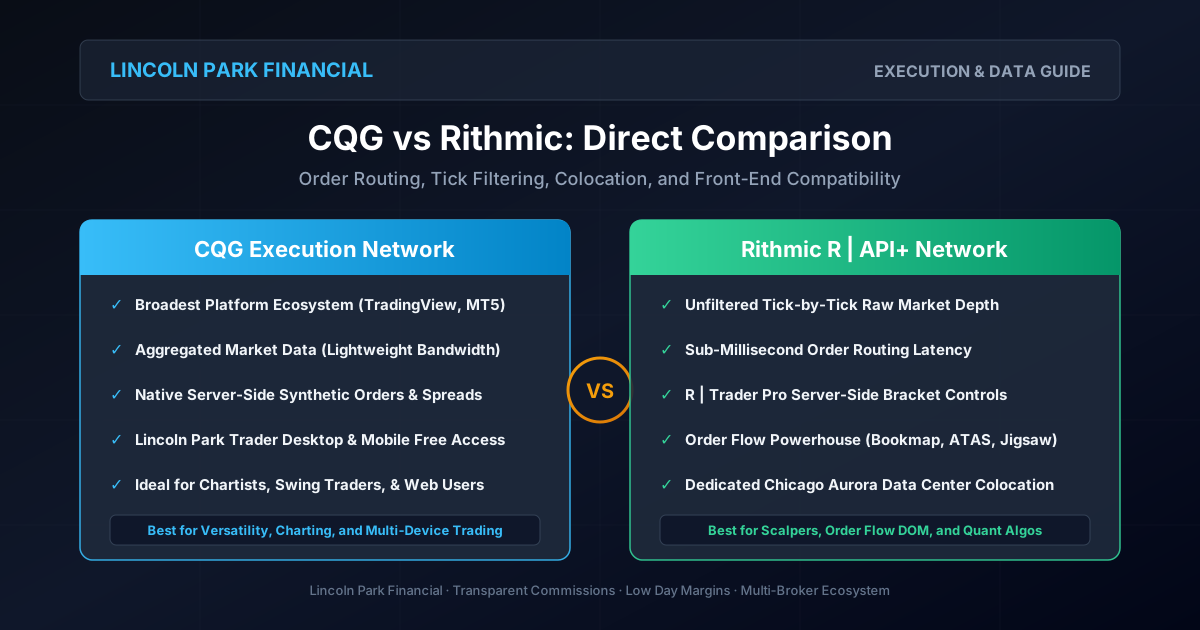
Trade Coinbase Futures using professional platforms including CQG, TradingView, Bookmap, Quantower, Sierra Chart, MotiveWave, and R | Trader Pro.
Whether you’re trading Bitcoin, Ether, Solana, or XRP futures, our team provides personalized support for account setup, platform selection, and market access.
Lincoln Park Financial is a Chicago-based futures introducing broker helping active traders access U.S. regulated Coinbase Futures Contracts through multiple clearing partners.
Yes. Many algorithmic traders access Coinbase Futures using professional trading platforms that support automated strategies, APIs, advanced charting, and custom order management.
Depending on your brokerage setup, traders may use platforms such as CQG, Sierra Chart, Quantower, MotiveWave, TradingView, Bookmap, or R | Trader Pro to develop and execute automated or semi-automated trading strategies.
Platform availability depends on the technology and clearing solutions associated with your futures account.
Many new futures traders begin with nano-sized contracts because they offer smaller notional values and generally require less capital than larger futures contracts.
Products such as Nano Bitcoin Futures or Nano Ether Futures allow traders to become familiar with order entry, margin requirements, and futures mechanics while managing smaller position sizes.
Choosing the right contract ultimately depends on your experience, account size, and trading plan rather than simply selecting the smallest product available.
Both Coinbase Derivatives and CME Group offer U.S. regulated cryptocurrency futures, but they're designed with different types of traders in mind. Coinbase Futures focuses on smaller, retail-friendly contract sizes such as Nano Bitcoin, Nano Ether, Solana, and XRP futures, making it easier to start with less capital. CME also offers micro contracts, but is widely known for its larger institutional Bitcoin and Ether futures.
The right exchange depends on your trading objectives, preferred contract size, and the markets you want to access. Many active traders evaluate both exchanges before deciding which products best fit their strategy.
Although they may sound similar, Coinbase Perpetual-Style Futures and offshore perpetual swaps are not the same product.
Traditional perpetual swaps, commonly found on offshore cryptocurrency exchanges, typically rely on funding payments exchanged between long and short positions throughout the day. Coinbase Perpetual-Style Futures are U.S. regulated futures contracts listed on Coinbase Derivatives and operate within the U.S. futures regulatory framework.
For traders looking for continuous market exposure without using offshore derivatives, perpetual-style futures offer an alternative within a regulated marketplace.
Yes. Many traders and investors use Coinbase Futures to hedge an existing cryptocurrency portfolio without selling their underlying assets.
For example, if you own Bitcoin and expect short-term volatility, opening a short futures position may help offset some of the downside risk while allowing you to continue holding your spot Bitcoin. Once market conditions improve, the hedge can be adjusted or removed.
Hedging strategies vary depending on your objectives, risk tolerance, and portfolio size, so it's important to understand how futures contracts work before implementing a hedge.
Monthly Coinbase Futures Contracts have a scheduled expiration date. At expiration, open positions are settled according to the contract specifications, and traders who wish to maintain exposure typically roll into a later contract month before expiration.
Perpetual-Style Futures are designed differently. Instead of requiring traders to move into a new monthly contract on a regular basis, they provide ongoing market exposure while remaining listed as regulated futures contracts.
Understanding whether you're trading a monthly or perpetual-style contract is an important part of managing your positions effectively.
Unlike paying the full value of a cryptocurrency position upfront, futures trading uses margin, which is the amount of capital required to open and maintain a position.
Margin requirements differ between contracts and can change based on market volatility, exchange requirements, and the clearing firm providing your account. This is why day margins and overnight margins are often different.
Before placing a trade, always verify the current margin requirements for the specific Coinbase Futures Contract you're trading.
Coinbase Futures can be accessed through a variety of professional futures trading platforms depending on your brokerage and clearing relationship.
Popular platforms include CQG, TradingView, Bookmap, Sierra Chart, Quantower, MotiveWave, and R | Trader Pro. Each platform offers different strengths, from advanced charting and order flow analysis to algorithmic trading and API connectivity.
The best platform depends on your trading style, technical requirements, and preferred workflow.
Yes. Coinbase Futures are designed for more than just individual traders. Hedge funds, proprietary trading firms, family offices, registered investment advisers, digital asset managers, and corporate treasury teams may all use regulated cryptocurrency futures as part of their investment or risk management strategies.
Institutional participants often value regulated markets because they provide standardized contracts, centralized clearing, and oversight within the U.S. futures framework.
Lincoln Park Financial provides access to Coinbase Futures through multiple Futures Commission Merchants (FCMs), allowing traders to choose the account structure and technology that best fits their needs.
Clients also have access to professional trading platforms, experienced futures specialists, and personalized support throughout the account setup process. Whether you're an active retail trader, algorithmic developer, or institutional participant, our goal is to provide access to U.S. regulated cryptocurrency futures with the tools and support needed to trade confidently.
Speak with our experienced futures brokers at 312-500-4730 to discuss how we can service your futures trading needs.